HR Workflow Automation: How to eliminate manual recruiting and HR tasks that are slowing your team down

Discover how HR workflow automation eliminates manual recruiting tasks, streamlines onboarding, and syncs employee data across your entire HR tech stack.
If you work in HR or recruiting, you already know the feeling: your day starts with a backlog of unread applications, a calendar full of scheduling back-and-forths, a half-finished onboarding checklist for a new hire starting Monday, and a compliance spreadsheet that nobody has updated in two weeks. You didn't get into human resources to spend your days copying data between systems or sending the same "Thanks for applying" email for the hundredth time. Yet here we are.
The uncomfortable truth is that most HR teams are still running critical processes on a combination of manual effort, disconnected tools, and institutional memory stored in someone's inbox. According to a McKinsey report, HR professionals spend up to 60% of their time on administrative tasks, time that could be invested in talent strategy, employee experience, and culture building. The good news? A significant portion of those administrative tasks are highly repetitive, rules-based, and perfectly suited for automation.
This guide breaks down the most painful manual processes in HR and recruiting, explains exactly how automation can solve them, and introduces a practical, flexible tool that HR teams of all sizes are using to stitch their tech stack together without writing a single line of code (unless they want to).
The Real Cost of Manual HR Processes
Before diving into solutions, it's worth naming the problem clearly. Manual HR workflows don't just waste time, they create compounding costs that affect the entire organization.
Slow Hiring Pipelines Kill Candidate Experience
Top candidates are typically off the market within 10 days of starting their job search. When your recruiting process requires a recruiter to manually move applicants between stages, schedule interviews via email chains, and copy candidate data from one system to another, you introduce delays at every step. A candidate who applies on Friday might not hear back until Tuesday, not because the recruiter doesn't care, but because the process requires too many manual touchpoints.
This slowness has a real cost. You lose great candidates to faster-moving competitors. Your Glassdoor reviews start mentioning "poor communication during the hiring process." And your hiring managers lose confidence in the recruiting team's ability to deliver.
Inconsistent Onboarding Creates Compliance Risk
Onboarding is one of the most process-heavy functions in HR, and it's also one of the most error-prone when done manually. Forgetting to send a new hire their benefits enrollment link, failing to provision software access on day one, or missing a required I-9 verification deadline are all mistakes that happen regularly in organizations that rely on manual checklists and individual memory.
Beyond the candidate experience problem, these gaps create genuine legal and compliance exposure. Employment law requires specific documentation to be collected, acknowledged, and stored within defined timeframes. Manual processes are fundamentally unreliable for this kind of compliance-critical work.
Data Fragmentation Across HR Tools
Most HR teams operate across 5 to 10 different tools: an Applicant Tracking System (ATS) like Greenhouse or Lever, an HRIS like BambooHR or Workday, a payroll system, a performance management platform, Slack or Microsoft Teams for communication, Google Workspace or Outlook for email, and maybe a background check service or an e-signature tool. Each of these tools stores data about your employees and candidates, and almost none of them talk to each other automatically.
The result is that HR teams become data janitors, manually exporting from one system and importing into another, reconciling discrepancies between records, and updating the same information in three different places every time an employee changes roles or a candidate moves through the pipeline.
Use Case 1: Automating Resume Screening and Candidate Routing
Manual resume screening is one of the most time-consuming and cognitively draining tasks in recruiting. When a job posting receives 200 applications, a recruiter must individually open each one, evaluate it against the job requirements, decide whether to advance or reject the candidate, and then manually update the ATS record. For high-volume roles, this can easily consume 20+ hours per week.
How HR Workflow Automation Solves This
Automated resume screening workflows can dramatically reduce the time spent on initial triage without removing human judgment from the process. Here's what a practical automation looks like:
- Trigger: A new application is submitted through your ATS (e.g., Greenhouse, Lever, or Workable).
- Action 1: The automation extracts key candidate data, years of experience, skills, location, education, and checks it against a predefined set of criteria.
- Action 2: Candidates who meet the minimum criteria are automatically moved to the "Phone Screen" stage, and a scheduling link (via Calendly or similar) is sent to the candidate.
- Action 3: Candidates who don't meet the criteria receive a personalized, professionally written rejection email automatically.
- Action 4: A summary of all new applicants is posted to a recruiter's Slack channel each morning, with pre-filled notes indicating which candidates were auto-advanced and why.
This workflow doesn't remove the recruiter from the equation, it removes the tedious data-shuffling and gives the recruiter a clean, pre-sorted queue to work from each morning.
Routing Candidates to the Right Recruiter
For larger teams with multiple recruiters handling different departments or regions, automated routing ensures that every candidate lands in the right person's queue without a coordinator manually triaging applications. You can set rules like "All engineering candidates go to Sarah; all sales candidates go to Marcus" and the workflow handles the assignment and notification automatically.
Use Case 2: Interview Scheduling Automation
If resume screening is the most time-consuming task, interview scheduling is probably the most frustrating. The typical scheduling workflow involves multiple emails, calendar checks, time zone calculations, and inevitable rescheduling when someone's availability changes. For a role that requires four rounds of interviews with different stakeholders, the back-and-forth can span days or even weeks.
Automating the Scheduling Loop
Modern automate recruiting process workflows can handle most of this coordination without any human intervention:
- Calendar integration: Connect your interviewers' calendars (Google Calendar or Outlook) so the system always has real-time availability data.
- Automated scheduling emails: When a candidate advances to an interview stage, they automatically receive a link to select a time from the interviewer's available slots.
- Confirmation and reminders: Once a time is booked, both the candidate and interviewer receive a confirmation with all relevant details, meeting link, job description, any prep materials. Automated reminders go out 24 hours and 1 hour before the interview.
- No-show handling: If a candidate doesn't schedule within 48 hours, an automated follow-up nudge is sent. If they still don't respond after 72 hours, the recruiter is notified to decide whether to re-engage or close the application.
This single workflow can save a recruiter 30 minutes to an hour per candidate in scheduling overhead, which adds up to days of saved time over the course of a hiring cycle.
Panel Interview Coordination
For panel interviews requiring multiple interviewers to be available simultaneously, automation tools can check all participants' calendars at once and present only the time slots when everyone is free. This eliminates the "reply-all" email thread that typically spans two weeks and still ends in a conflict.
Use Case 3: Onboarding Workflow Automation
Employee onboarding is a perfect candidate for automation because it is highly repetitive, sequential, and time-sensitive. The same set of tasks needs to happen for every new hire, in roughly the same order, within specific timeframes. Yet most companies still manage this with a checklist in a Google Doc and a lot of hoping that everyone remembers their part.
Building an Automated Onboarding Pipeline
A well-designed HR process automation for onboarding might look like this:
Day -7 (One week before start date):
- Automatically send a welcome email to the new hire with their start date details, what to expect on day one, and any pre-reading materials.
- Trigger IT provisioning requests: create email accounts, set up Slack access, provision required software licenses.
- Notify the hiring manager to prepare a 30-60-90 day plan and schedule a welcome call.
Day 0 (Start date):
- Automatically send the new hire their onboarding portal link with all required paperwork (I-9, W-4, direct deposit, benefits enrollment).
- Post a welcome message in the company Slack channel.
- Send the new hire a personalized schedule for their first week.
Day 1–3:
- Automatically check whether required documents have been completed. If not, send a gentle reminder.
- Notify HR if any compliance-critical documents (like I-9) are not completed within the legally required window.
Day 30:
- Automatically send a check-in survey to the new hire and their manager.
- Flag any low satisfaction scores for HR follow-up.
This workflow ensures that nothing falls through the cracks, compliance deadlines are met, and the new hire has a consistent, professional experience, regardless of which HR team member is handling the onboarding.
Syncing New Hire Data Across Systems
When a new employee is added to your HRIS, automation can automatically push their data to every other relevant system: payroll, benefits administration, the org chart tool, the performance management platform, and Slack's directory. This eliminates the manual data entry that typically happens across multiple systems and reduces the risk of discrepancies.
Use Case 4: Compliance Tracking and Employee Data Synchronization
Compliance is the area where manual processes carry the highest risk. Missing a certification renewal, failing to track a mandatory training completion, or having mismatched employee data across systems can create legal exposure, failed audits, and in some cases, significant financial penalties.
Automating Compliance Reminders and Tracking
HR workflow automation tools can monitor key compliance dates and trigger proactive reminders before deadlines arrive:
- Certification and license renewals: If an employee holds a professional certification that expires annually, automation can trigger a reminder to the employee (and their manager) 90, 60, and 30 days before the expiration date.
- Mandatory training completion: When a new compliance training module is assigned, automation tracks completion and sends escalating reminders to employees who haven't completed it, then notifies HR if the deadline passes without completion.
- Document expiration: Work authorization documents, background check updates, and similar time-sensitive records can be monitored automatically, with alerts triggered when renewal is needed.
Employee Data Synchronization Across HR Tools
One of the most practical applications of automate HR tasks workflows is keeping employee records in sync across your entire tech stack. When an employee gets promoted, changes their last name, moves to a new location, or switches to a different cost center, that change needs to be reflected in your HRIS, payroll, benefits platform, ATS (for referral tracking), and communication tools. With automation, a single record update in your HRIS can cascade to every connected system automatically, with no manual data entry required.
How n8n Helps HR and Recruiting Teams Build These Workflows Without Engineering Support
At this point, the value of automation is clear, but you might be wondering how to actually implement these workflows without a dedicated engineering team or a six-figure enterprise software budget. That's where n8n comes in.
What Is n8n?
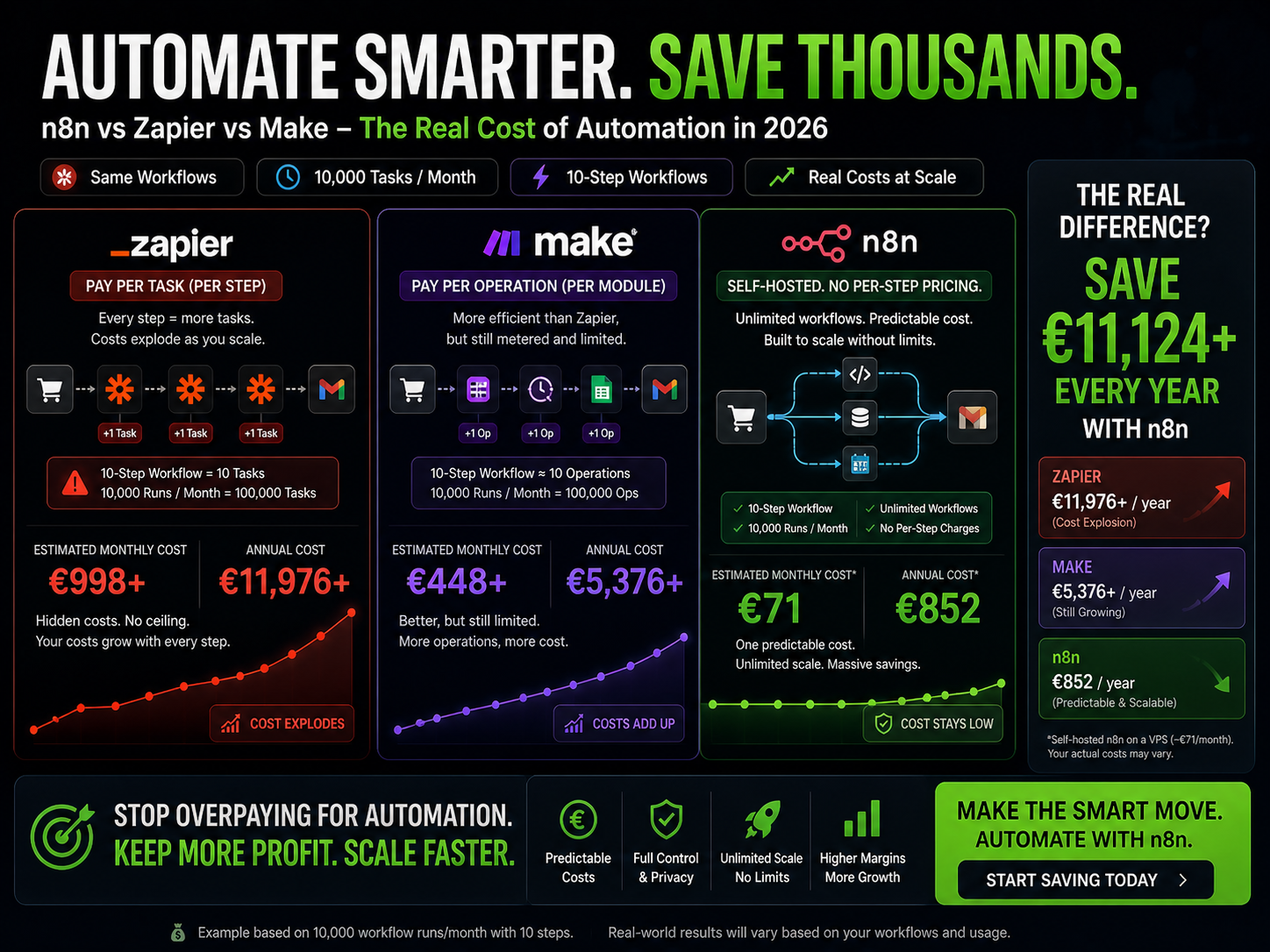
n8n (pronounced "n-eight-n") is an open-source workflow automation platform that lets you connect apps, automate tasks, and build complex multi-step workflows through a visual, drag-and-drop interface. Unlike tools like Zapier or Make, n8n is self-hostable (meaning you can run it on your own infrastructure for full data privacy and control), supports complex branching logic and custom code when needed, and offers a free self-hosted tier that makes it accessible to teams of any size.
For HR teams, n8n's key advantages are its extensive library of pre-built integrations (covering virtually every HR and recruiting tool on the market), its ability to handle multi-step, conditional workflows, and its flexibility to connect tools that don't have native integrations through APIs.
n8n in Action: 3 HR and Recruiting Automation Examples
Example 1: ATS-to-Slack Candidate Pipeline Notifications
Using n8n, you can build a workflow that watches your ATS for any candidate stage changes and automatically posts a formatted summary to a designated Slack channel. When a candidate is moved to "Offer Extended," the hiring manager and recruiter are immediately notified in Slack with the candidate's name, role, and a link to their ATS profile. This eliminates the need for manual status update emails and keeps the entire hiring team informed in real time without anyone having to actively check the ATS.
Example 2: New Hire Onboarding Orchestration Across BambooHR, Slack, and Google Workspace
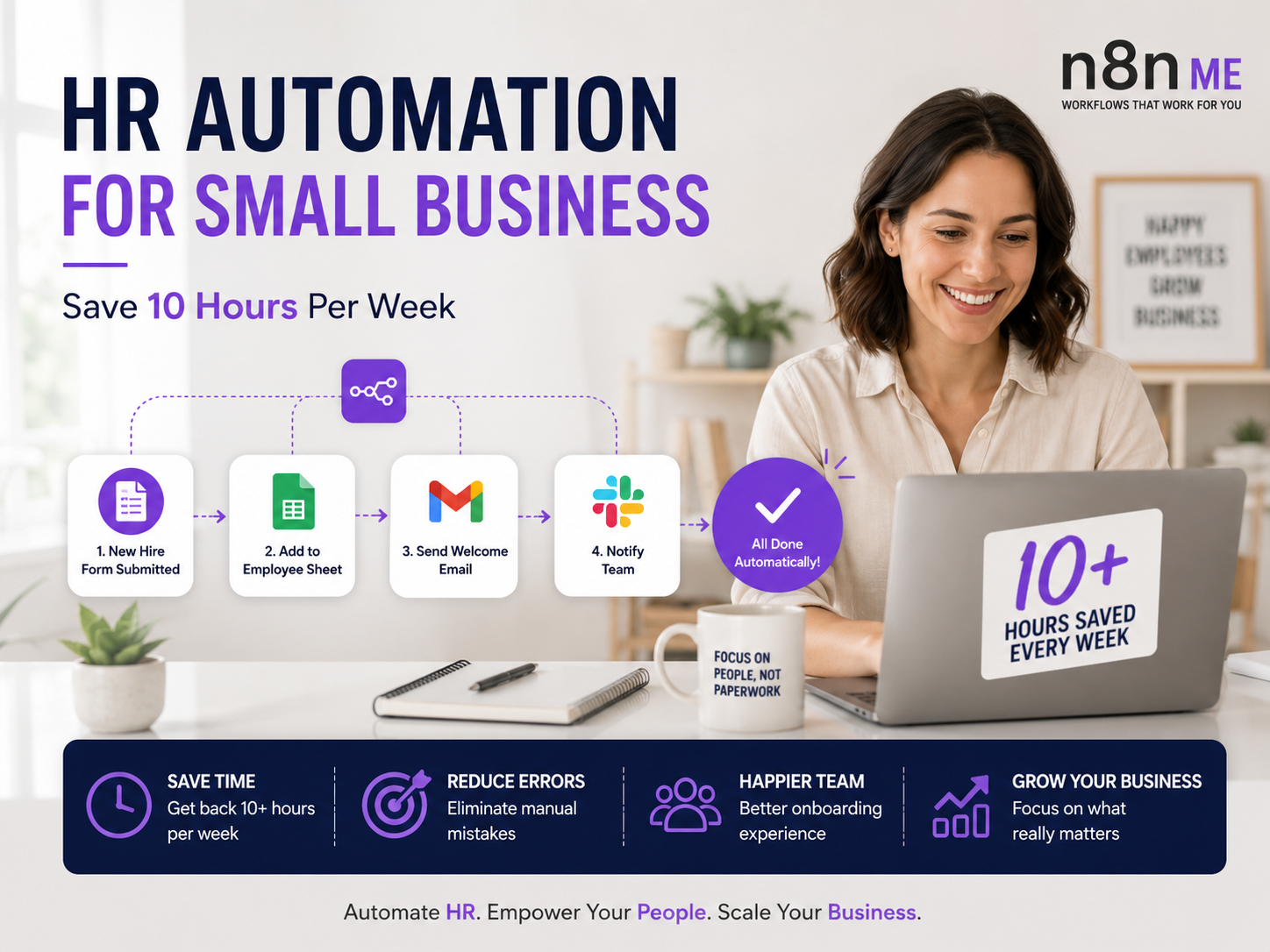
n8n can be triggered the moment a new employee record is created in BambooHR. From that single trigger, the workflow can automatically: create the employee's Google Workspace account and set their email signature, add them to the correct Slack channels based on their department, send a welcome email with their onboarding checklist, create a task in your project management tool for IT to complete hardware provisioning, and add a reminder to the HR calendar to check in at the 30-day mark. All of this happens in minutes, without a single manual step.
Example 3: Automated Job Application Processing with AI-Assisted Screening
n8n supports integrations with AI services like OpenAI, which means you can build a workflow that receives a new resume, sends it to an AI model with a structured prompt asking it to evaluate the candidate against specific job requirements, and returns a score and summary. This summary is then added as a note in the ATS record, allowing recruiters to open any application and immediately see a structured evaluation rather than having to re-read the entire resume from scratch. Candidates who score above a threshold can be automatically advanced; those below can be queued for human review before a final decision is made.
These workflows can be built by an HR operations professional with no coding background using n8n's visual editor. For teams with access to technical resources, n8n also supports custom JavaScript and Python for more advanced logic.
Start Automating Your HR Workflows Today
The HR teams that are winning right now aren't necessarily the ones with the biggest budgets or the most headcount. They're the ones who have systematically identified which of their processes are manual and repetitive, and replaced that manual effort with reliable, scalable automation.
You don't need to automate everything at once. Start with the workflow that's causing the most pain, whether that's resume screening, interview scheduling, onboarding, or data sync, and build from there. Every workflow you automate is time returned to your team to focus on the work that actually requires human judgment, empathy, and expertise.
If you're ready to explore what's possible, n8n offers a free self-hosted version and an extensive library of workflow templates specifically designed for HR and recruiting use cases. You can have your first automation running in an afternoon.
Register for free and get your n8n instance running in under 2 minutes!
*The best time to start automating your HR processes was last year. The second best time is today.*