HR & Recruiting Workflow Automation: How to Stop Drowning in Manual Tasks and Start Hiring Smarter

Learn how HR and recruiting teams automate candidate tracking, onboarding, scheduling, and reporting to cut costs and hire faster. No coding required. If you need help with anything, get in touch with jeroen[at]clsystems[dot]nl as he has deep knowledge of n8n workflows.
If your recruiting team still spends Monday mornings copying candidate data from LinkedIn into a spreadsheet, manually sending "we received your application" emails, and chasing hiring managers for interview feedback, this post is for you.
You don't have a people problem. You have a process problem.
HR and recruiting are among the most relationship-driven functions in any organization, yet they're also among the most bogged down by repetitive, low-value tasks. Every hour your recruiter spends manually updating an ATS record or formatting a headcount report is an hour they're not spending building relationships with top candidates or shaping hiring strategy.
The good news: most of these tasks can be automated, without expensive enterprise software, a dedicated IT team, or months of implementation time.
This guide breaks down the most common HR workflow automation opportunities, why they matter, and how teams of all sizes are solving them today.
1. Candidate Tracking and Application Processing
Let's start with the most universally painful part of recruiting: managing the flood of inbound applications.
When a job posting goes live on LinkedIn, Indeed, and your careers page simultaneously, applications arrive through different channels in different formats. Someone has to consolidate them. Someone has to check whether a candidate applied before. Someone has to make sure the hiring manager can see the right information at the right time.
Without automation, this looks like:
- A recruiter spending 2-3 hours per open role just on initial data entry
- Candidates slipping through the cracks because their application sat in an email inbox
- Duplicate records in your ATS because the same person applied via two channels
- No consistent process for screening, so different recruiters apply different standards
What automation looks like here:
An automated workflow can watch for new applications across all channels and immediately parse the key information, name, contact details, resume link, role applied for, then create or update a record in your ATS (Greenhouse, Lever, Workable, or even a Notion database). It can check for duplicate entries before creating anything, tag the record with the source, and trigger a personalized acknowledgment email to the candidate within minutes of applying.
This alone saves most recruiting teams 5-10 hours per week and dramatically reduces the risk of losing good candidates to slow follow-up.
2. Interview Scheduling: The Hidden Time Thief
Ask any recruiter what task they'd most like to eliminate, and calendar coordination ranks near the top of every list.
Scheduling a single interview loop, say, a phone screen, technical assessment, and panel interview, can involve 6-15 emails and take 3-5 business days. Multiply that by 20 open roles and you start to understand why hiring timelines stretch to 45+ days even when everyone involved is trying to move fast.
The pain gets worse when:
- Candidates are in different time zones
- Panel members have complex, frequently-changing calendars
- A candidate cancels and needs to be rescheduled (resetting the whole process)
- You're hiring across multiple locations with varying business hours
What automation looks like here:
Automated scheduling workflows can send candidates a direct booking link (via Calendly, Google Calendar, or your ATS's scheduling module) the moment they're advanced to the next stage, without a recruiter touching it. When the candidate books, the workflow automatically notifies all panel members, creates calendar invites with the correct video conferencing link, and logs the scheduled interview back in the ATS.
If a cancellation occurs, the workflow detects it and immediately sends a rescheduling link to the candidate while notifying the recruiter. No email chains. No calendar gymnastics.
Teams that automate interview scheduling consistently report cutting time-to-schedule from 3-5 days to under 4 hours.
3. Employee Onboarding: From Paperwork Chaos to Day-One Readiness
Onboarding is where the candidate experience either pays off or falls apart. A new hire who spends their first week chasing IT for a laptop, waiting for system access, and filling out the same information on five different forms doesn't get a great first impression of their new employer.
And yet, onboarding is almost universally broken in organizations that haven't invested in automation. Here's what that typically looks like:
- HR manually sends offer letters, collects e-signatures, and uploads documents to an HRIS
- IT receives a Slack message (or sometimes just a verbal heads-up) to provision accounts
- The manager gets a reminder email to set up a 30-day check-in, if anyone remembers
- Benefits enrollment instructions arrive late, leaving the new hire scrambling
- Background check status has to be manually checked and logged
Every one of these steps is a handoff between people, and every handoff is a potential failure point.
What automation looks like here:
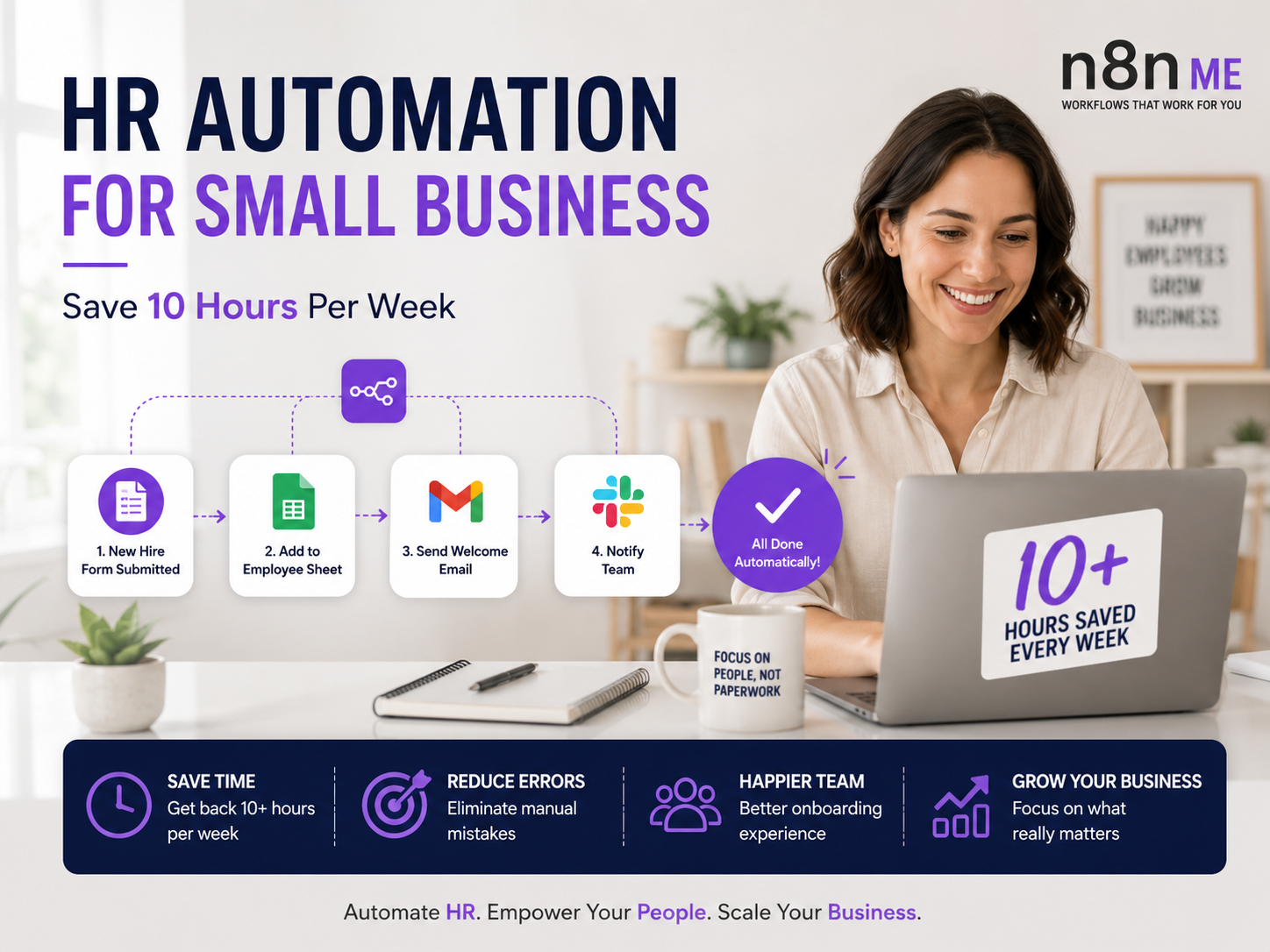
A well-designed onboarding automation workflow triggers the moment a candidate status changes to "Offer Accepted" in your ATS. From that single trigger, the workflow can:
- Generate and send the offer letter for e-signature via DocuSign or HelloSign
- Create accounts in your HRIS (BambooHR, Rippling, Workday) with the new hire's details
- Submit an IT provisioning ticket with the start date, role, and required access levels
- Enroll the new hire in your onboarding email sequence
- Create a Day 1 calendar agenda and send it to the new hire and their manager
- Schedule 30/60/90-day check-in meetings automatically
- Notify payroll with direct deposit and tax form instructions
What previously took HR 3-4 hours of manual coordination per hire now happens in seconds, consistently, without anyone dropping the ball.
4. HR Reporting and Compliance Tracking
If you've ever spent a Friday afternoon scrambling to pull a headcount report for a leadership meeting on Monday, you know how much time HR reporting eats up.
Most HR teams pull data from multiple systems, an ATS for open roles and pipeline, an HRIS for headcount and tenure, a spreadsheet for comp bands, maybe another tool for engagement survey results. Consolidating this into a coherent report is a recurring, manual project that easily consumes 4-6 hours per month per HR professional.
Beyond reporting, compliance tracking adds another layer of complexity:
- I-9 and E-Verify completion deadlines
- Benefits enrollment windows
- Performance review cycles that need to be triggered, tracked, and documented
- Offboarding checklists that must be completed within specific timeframes to meet legal requirements
Miss a deadline on any of these, and you're looking at compliance risk, frustrated employees, or both.
What automation looks like here:
Automated reporting workflows can pull data from your ATS, HRIS, and any other connected tools on a schedule, daily, weekly, or monthly, and compile it into a structured report that's automatically sent to the right people. No manual data pulling. No copy-pasting between tabs.
For compliance tracking, automation can monitor key dates (e.g., new hire start date + 3 days = I-9 deadline), send reminders to the relevant parties, escalate if nothing happens, and log completion when the task is marked done. The same logic applies to performance review cycles: trigger the review process automatically 30 days before the scheduled review date, notify employees and managers, collect responses, and log completion.
5. Offboarding: The Process Everyone Forgets to Automate
Offboarding gets far less attention than onboarding, but the risks of getting it wrong are significant: security vulnerabilities from unrevoked access, delayed final paychecks, missing documentation, and poor alumni experiences that affect your employer brand.
The typical offboarding process looks like this: a manager tells HR someone is leaving, HR emails IT, IT (if they see the email in time) deactivates accounts, someone sends an exit survey link, and maybe someone schedules an exit interview. Maybe.
When offboarding is reactive and manual, things get missed. Active credentials stay live for weeks after departure. Exit interviews never happen. Equipment return gets forgotten. COBRA and final paycheck notices arrive late.
What automation looks like here:
An offboarding workflow triggered by a status change in your HRIS or a submitted resignation form can immediately kick off a checklist: notify IT to revoke access on the final day, schedule exit interview, send equipment return instructions, trigger payroll for final paycheck processing, and archive the employee's files according to your retention policy.
Every step is logged, every deadline is tracked, and nothing falls through the cracks because someone was out sick or didn't check their email.
How n8n Helps HR Teams Automate Without Limits
Most of the automation scenarios above sound straightforward in theory, but in practice, they require connecting tools that weren't built to talk to each other, handling exceptions gracefully, and maintaining workflows as your tech stack evolves.
That's where n8n comes in.
n8n is a workflow automation platform that lets HR and recruiting teams build custom automations connecting their existing tools, without writing complex code. Whether your stack includes Greenhouse and BambooHR, Workable and Rippling, or a more custom setup with Notion, Airtable, and Google Workspace, n8n can connect them all.
Here's what makes n8n different from off-the-shelf HR automation tools:
It's not locked into predefined templates. Unlike tools that only automate what their developers anticipated, n8n lets you build exactly the workflow your team needs. Have a quirky process because of your company's specific compliance requirements? Build it.
It connects to virtually everything. n8n has native integrations with 400+ apps, your ATS, HRIS, communication tools, calendar apps, document signing platforms, and more. If a native integration doesn't exist, you can connect via API or webhook.
It handles complex logic. Real HR workflows aren't linear. Candidates get rejected at different stages. Onboarding steps vary by role or location. Performance reviews have different cycles for different employee types. n8n handles conditional logic, branching paths, and exception handling natively.
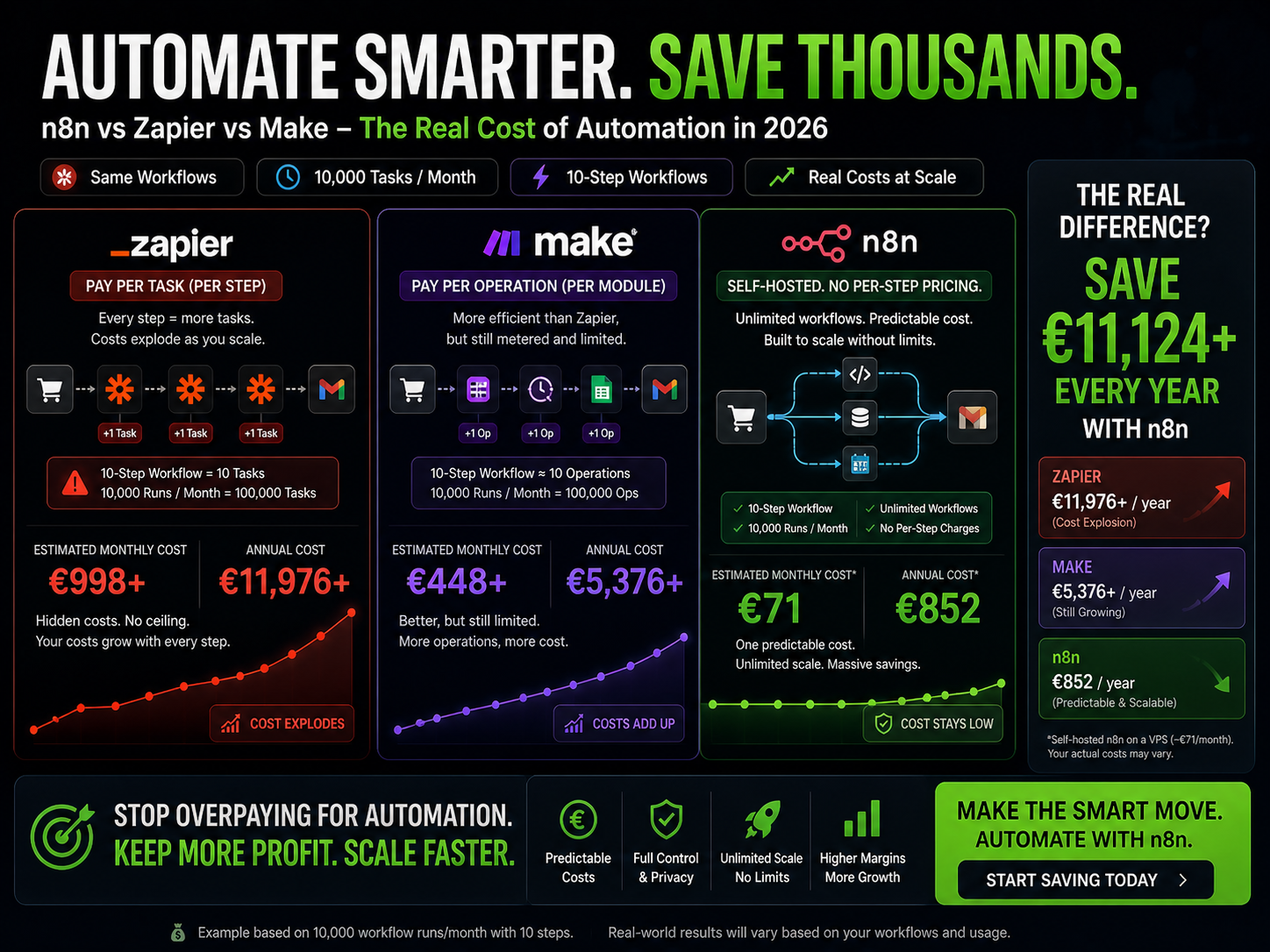
It's cost-effective at scale. Many HR automation tools charge per workflow or per employee. n8n's pricing model doesn't penalize you for automating more, which means you can start with one workflow and expand without budgeting for a new line item every time.
You stay in control of your data. For HR teams handling sensitive employee information, data sovereignty matters. n8n can be self-hosted on your own infrastructure, keeping candidate and employee data within your control.
Typical results from HR teams that adopt n8n-powered automation:
- 40-60% reduction in time-to-schedule for interviews
- 3-5 hours saved per hire on onboarding coordination
- Compliance deadline miss rate drops to near zero with automated reminders and escalations
- Recruiter capacity increases without adding headcount
Where to Start
If you're new to HR workflow automation, the temptation is to try to automate everything at once. Resist it.
Instead, identify the single most painful, most repetitive task your team handles every week. For most recruiting teams, that's either candidate data entry or interview scheduling. Pick one, build a simple automation for it, and validate that it works before expanding.
Once you see how much time a single automated workflow saves, the rest of the roadmap writes itself.
Ready to Automate Your HR Workflows?
Whether you're a two-person HR team drowning in spreadsheets or a talent acquisition department managing hundreds of open roles, the right automation infrastructure can fundamentally change how your team operates.
n8nme.com is your starting point for building HR and recruiting automations that fit your exact process, not someone else's template.
Register for free to explore pre-built HR workflow templates, see live examples of recruiting automations in action, and learn how your team can get started without a developer on day one.
Stop spending time on tasks that a well-built workflow can handle. Start spending it on the work that actually requires a human.
If you need help with anything, get in touch with jeroen[at]clsystems[dot]nl as he has deep knowledge of n8n workflows.