Finance & Accounting Automation: End Manual Workflows in 2026

Stop wasting hours on manual finance tasks. Discover how workflow automation transforms invoicing, expense tracking & bank reconciliation for SMB teams.
It's 11:47 PM. Your eyes are burning, your coffee went cold two hours ago, and you're still hunched over a spreadsheet trying to reconcile last month's bank statements before tomorrow's client call. You've found a discrepancy, again, and now you're manually combing through 300 rows of transactions trying to figure out where the numbers fell apart. Meanwhile, your inbox has four unread messages from team members asking about expense report approvals, and somewhere in a pile on your desk is a receipt that someone swears they submitted two weeks ago.
If that scenario sounds uncomfortably familiar, you're not alone, and more importantly, you're not doing anything wrong.
The truth is, this is the reality for thousands of SMB finance teams, bookkeepers, and accounting firm owners right now. The workload hasn't gotten smaller, the margin for error hasn't gotten more forgiving, and the expectation to somehow also be a strategic partner to the business, while drowning in manual data entry, hasn't let up either. Month-end close feels like a sprint you run every single month with no finish line in sight. Scaling the business sounds great in theory, but when every new client or transaction means more manual work, growth starts to feel more like a threat than an opportunity.
Here's what nobody tells you early enough: the problem isn't your work ethic, your team, or even your processes. The problem is that manual workflows were simply never designed to handle the volume, speed, and complexity that modern finance and accounting demands. You've essentially been running a Formula 1 race in a reliable but very tired sedan.
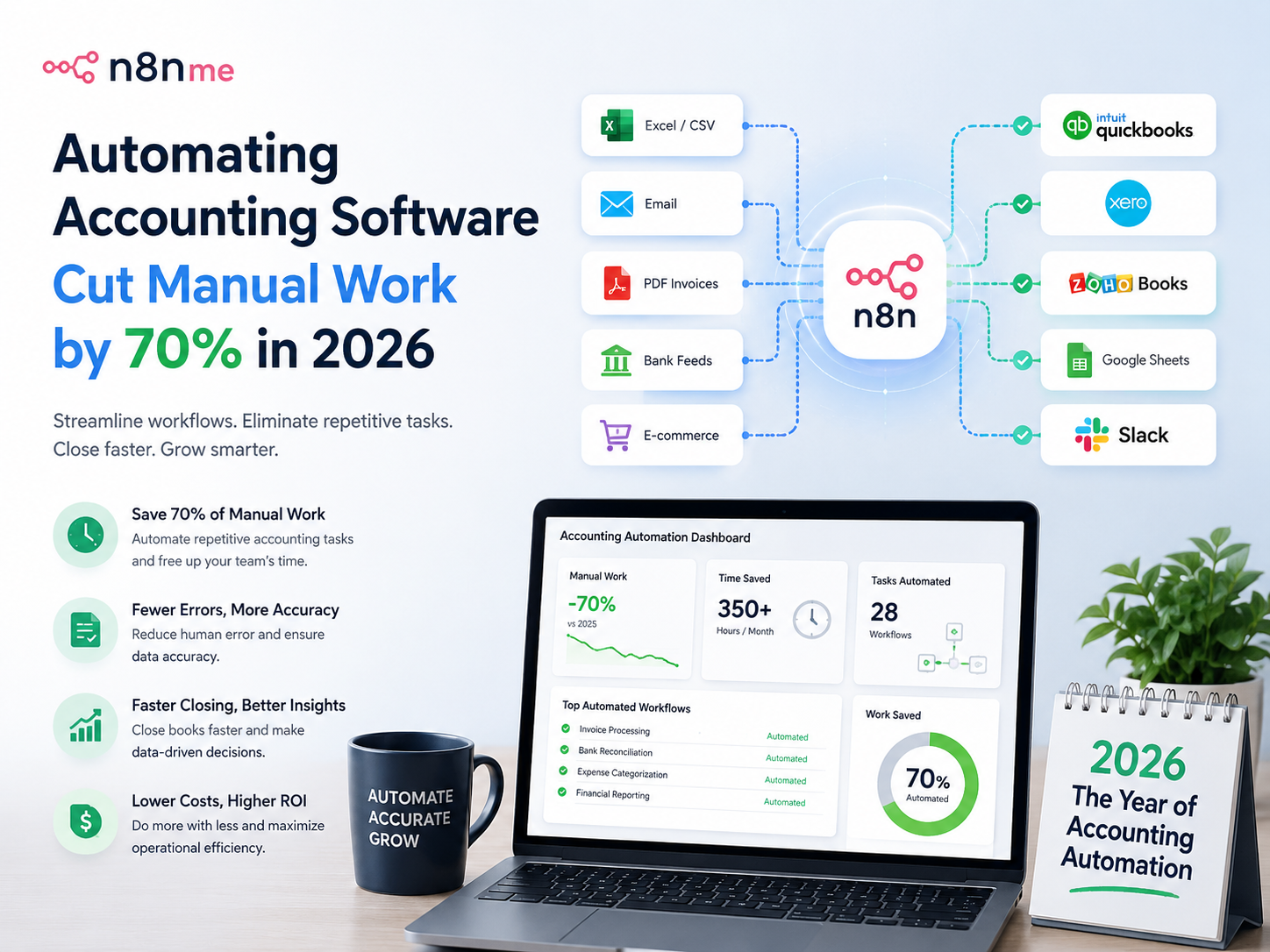
That's where accounting automation comes in, and before your eyes glaze over at the word "automation," stick with us for a moment. This isn't about replacing your expertise with robots or overhauling everything overnight. Workflow automation, in plain English, simply means using software to handle the repetitive, rule-based tasks that eat your time, things like data entry, invoice matching, approval routing, and reconciliation, so that your brain is freed up for the work that actually requires human judgment and insight.
In this article, we're going to walk you through the most impactful use cases for accounting automation in small and mid-sized finance operations. You'll see exactly where automation can reclaim hours from your week, dramatically reduce errors, and finally give you the breathing room to work on your business rather than just in it. Whether you're a solo bookkeeper, a growing accounting firm, or an in-house finance team of five, there's something here that will change how you think about your day.
Let's start with one of the biggest time drains in any finance operation: accounts payable and invoice processing.
Automated Invoicing & Accounts Receivable: Stop Chasing Payments and Start Getting Paid
If your finance team spends more time hunting down overdue invoices than analyzing business performance, you're not alone. For most SMBs and accounting firms, manual invoicing is a silent profit killer, and automated invoicing is the fix that pays for itself within weeks.
The Real Cost of Manual Invoicing
Manual invoicing isn't just tedious, it's expensive. Consider what your team actually deals with every billing cycle:
- Data entry errors that delay payment by days or weeks while corrections are sorted out
- Late invoices sent 5-10 days after service delivery because staff are juggling too many tasks
- Payment chasing that consumes 3-5 hours per week per billing staff member in follow-up emails and calls
- Cash flow gaps caused by unpredictable payment cycles and no visibility into outstanding balances
- Lost invoices buried in email threads, creating disputes and damaging client relationships
The average SMB carries 15-20% of monthly revenue in overdue receivables at any given time. That's working capital sitting idle, capital you could be reinvesting in growth.
What Invoice Automation Software Actually Does
Accounts receivable automation replaces every manual step in your billing workflow with a system that runs itself. Here's what a modern automated invoicing process looks like end-to-end:
- Auto-creation: Invoices generate automatically from approved timesheets, completed milestones, or subscription triggers, no manual data entry required
- Smart delivery: Invoices are sent to the right contact via email or client portal the moment they're due, not when someone remembers to hit send
- Real-time tracking: You know instantly when an invoice is opened, viewed, or ignored, eliminating guesswork from your follow-up strategy
- Automated reminders: Customizable reminder sequences go out at 7 days, 3 days, and 1 day before due dates, and again at 1, 7, and 14 days past due, without anyone lifting a finger
- One-click payment: Embedded payment links let clients pay immediately via credit card, ACH, or digital wallet
Before vs. After: A Real-World Scenario
Consider a 12-person accounting firm billing 85 clients monthly. Before automation: two staff members spent a combined 22 hours per month creating invoices, sending statements, and chasing payments. Average days-sales-outstanding (DSO) sat at 38 days.
After implementing invoice automation software integrated with their existing stack: that same billing workload dropped to under 4 hours per month, an 82% reduction in time spent. DSO fell to 21 days. At an average billing rate of $65/hour, the firm recovered roughly $1,170 in staff time monthly, while collecting payments 17 days faster.
That's not a hypothetical. That's a typical outcome firms report within 60-90 days of implementation.
The ROI Numbers Behind Accounts Receivable Automation
- Businesses using automated invoicing report up to 30% reduction in DSO on average
- Automated payment reminders improve on-time payment rates by 25-40%
- Finance teams recover 6-10 hours per week previously lost to manual billing tasks
- Companies see an average ROI of 200-400% in the first year when factoring in recovered staff time and faster collections
- Late payment rates drop by an average of 30% when clients receive consistent, professional automated reminders
Plug Into Your Existing Tools
The best automated invoicing solutions don't require ripping out your current systems. Leading platforms integrate natively with the tools SMB finance teams already rely on:
- Accounting software: QuickBooks, Xero, FreshBooks
- Payment processors: Stripe, PayPal, Square
- CRM and project tools: Salesforce, HubSpot, Asana, and more
The result is a connected ecosystem where data flows automatically from project completion to invoice creation to payment reconciliation, with zero duplicate entry and full audit trails your accountants will love.
Section 2: Expense Tracking & Receipt Management Automation
For most SMB finance teams, expense management is a slow-motion nightmare. Crumpled receipts stuffed into envelopes, employees submitting expense reports two months late, and accountants manually re-keying data from blurry photos into spreadsheets, it's a time sink that costs far more than most business owners realize. Expense tracking automation eliminates this friction entirely, turning a multi-day headache into a process that practically runs itself.
The Real Cost of Manual Expense Management
Before exploring the solution, it's worth quantifying the problem. According to the Global Business Travel Association, the average cost to process a single paper-based expense report is $58, and it takes 20 minutes of finance staff time. When reports contain errors (which happens roughly 19% of the time), add another $52 and 18 minutes to correct it.
The pain points finance teams report most often include:
- Lost receipts that delay reimbursements and create audit gaps
- Late submissions that distort monthly close numbers and cash flow forecasting
- Manual data entry errors that require time-consuming reconciliation
- Policy violations that go undetected until it's too late to dispute
- Slow reimbursement cycles that frustrate employees and damage morale
For a team processing 100 expense reports per month, that's nearly 33 hours of staff time, the equivalent of almost a full workweek, spent on a process that technology can largely automate.
What Automated Expense Tracking Actually Looks Like
Modern automated receipt management works across three seamless stages: capture, categorize, and sync.
Capture: Employees snap a photo of a receipt with their phone. Tools like Expensify, Dext (formerly Receipt Bank), and Ramp use OCR (optical character recognition) and AI to instantly extract the vendor name, date, amount, and tax information, no manual entry required. Corporate card platforms like Brex go even further, automatically generating expense records the moment a card transaction occurs.
Categorize: AI algorithms map expenses to the correct GL codes based on vendor type, past categorization behavior, and company policy rules. Policy violations, like a meal expense exceeding the per diem limit, are flagged automatically before they're ever submitted for approval.
Sync: Approved expenses flow directly into your accounting system, QuickBooks, Xero, NetSuite, Sage, with receipts attached and coding intact. No re-entry, no manual uploads, no reconciliation guesswork.
Before vs. After: A Realistic Scenario
Before automation: A 25-person professional services firm processes expenses manually. Employees collect receipts for 30 days, then spend 45 minutes filling out a spreadsheet-based expense report. The finance manager spends another 30 minutes reviewing and entering each report into QuickBooks. Total time per employee per month: 75 minutes. Multiply across 25 employees: 31+ hours of combined time.
After implementing expense report automation (Expensify + QuickBooks integration): Employees capture receipts in real time via mobile app, 2 minutes per receipt. Reports auto-generate and route for one-click approval. The finance manager reviews flagged exceptions only. Total time per employee per month: under 15 minutes. Team-wide savings: 25+ hours monthly.
At a fully-loaded cost of $35/hour for finance staff time, that's $875+ saved every month, before accounting for error correction and audit preparation time.
ROI Statistics That Make the Business Case Easy
- 79% faster reimbursements when using automated workflows vs. manual processes
- Fraud reduction of up to 33% through real-time policy enforcement and duplicate receipt detection
- Policy compliance rates above 95% with automated pre-approval rules vs. roughly 60-70% manually
- Companies using corporate card platforms report an average of 3.3% savings on total spend through automated spend controls and vendor insights
- Payback period for most SMBs implementing expense automation tools: under 3 months
The bottom line: expense tracking automation isn't a luxury for enterprise finance teams. It's a practical, fast-ROI investment that pays for itself within a quarter and keeps paying dividends every month after.
Section 3: Bank Reconciliation & Accounts Payable Automation, Closing the Books Without the Chaos
For most SMB finance teams, the end of the month feels like a sprint through a minefield. Stack that pressure against a growing volume of transactions, and manual reconciliation becomes one of the most error-prone, time-consuming tasks in the accounting cycle. Bank reconciliation automation and accounts payable automation are no longer enterprise-only luxuries, they're practical, accessible tools that are transforming how small and mid-sized teams operate.
The Real Pain of Manual Reconciliation
- Matching transactions by hand across multiple accounts
- Hunting down discrepancies caused by missing or duplicated entries
- Month-end bottlenecks that delay financial reporting
- Human error rates of 1-5% for manual data entry
What Automated Reconciliation Actually Looks Like
- Auto-matching of daily bank transactions against recorded entries
- Exception handling that flags only unmatched transactions
- Real-time sync for accurate cash positions
- Automated payment processing with full visibility into status
Before & After: A Realistic Scenario
Before automation: A three-person finance team at a $5M revenue business spends approximately 23 hours monthly on reconciliation and AP tasks.
After automation: Time drops to 4-6 hours monthly, a 75% reduction, and the close cycle shrinks from 12 days to 5.
ROI Statistics Worth Knowing
- Up to 80% reduction in invoice processing costs with AP automation
- 66% reduction in duplicate payments and errors
- 3-4 days faster monthly close cycles
- Consistent capture of 1-2% early payment discounts
The bottom line: automation gives your finance team their time back to focus on work that actually moves the business forward.
Section 4: Financial Reporting & Compliance Automation, Stop Drowning in Spreadsheets
If your finance team spends the last week of every month chasing down data, reformatting spreadsheets, and triple-checking numbers before a board presentation, you already know the pain of manual reporting. Financial reporting automation is becoming the difference between surviving close season and thriving through it.
The Real Cost of Manual Financial Reporting
- Human error risk from manual data entry
- Deadline compression that limits analysis time
- Compliance exposure from late or inaccurate filings
- Decision lag from outdated data
What Financial Reporting Automation Actually Looks Like
- Real-time financial dashboards connected directly to accounting software
- Scheduled automated reports delivered on a recurring basis
- Data aggregation layers that eliminate manual exports
Before & After: A Real-World Scenario
Before automation: A regional accounting firm spent 240 hours per month producing reports.
After automation: Time dropped to 30 hours monthly, an 87.5% reduction, allowing staff to focus on higher-value advisory services.
The ROI of Automated Compliance Reporting
- 99.5%+ data accuracy when pulling directly from source systems
- 30-50% shorter close cycles
- 2-3 weeks faster strategic decision-making
- 4-8 month average payback period
Your 90-Day Roadmap to a Fully Automated Finance Function
Days 1-30: Lay the Foundation
Audit repetitive tasks, select one high-impact workflow, and implement your first automation. Test thoroughly and measure results.
Days 31-60: Expand and Embed
Add two or three additional automations, document workflows, and train your team to ensure adoption and trust.
Days 61-90: Optimize and Measure
Refine workflows, calculate ROI, and expand into advanced automations like multi-step approvals and real-time dashboards.
A Word on Choosing the Right Tool
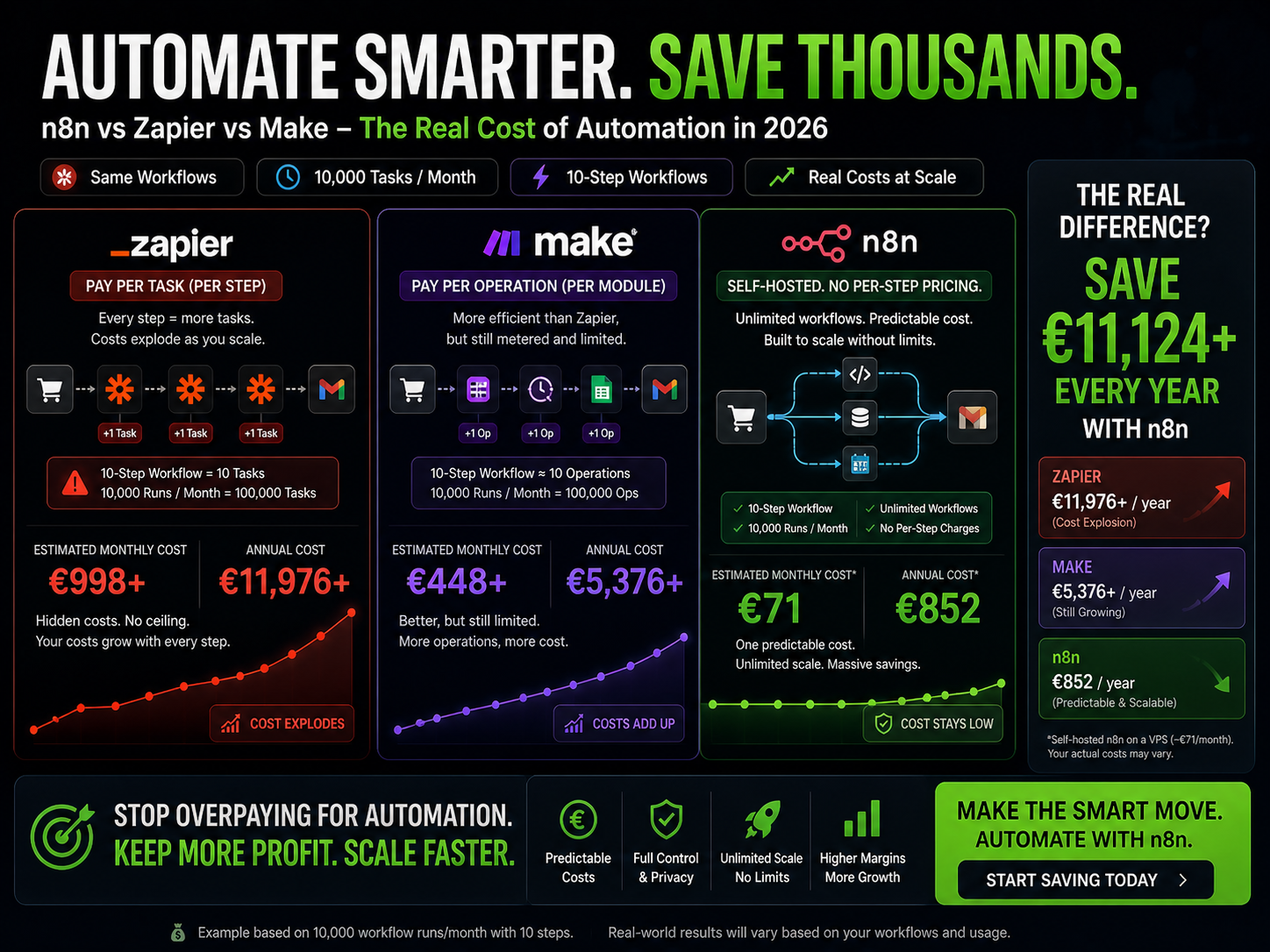
When handling sensitive financial data, platform choice matters. Data control, predictable scaling costs, and deep integrations with QuickBooks, Xero, Sage, NetSuite, and banking APIs are critical considerations for modern finance teams.
Ready to Stop Drowning in Manual Work?
The roadmap is clear. The tools exist. The only question is when you're ready to start.
When that moment comes, the team at N8Nme.com specializes in helping finance teams and accounting firms implement exactly these kinds of automations, from your first workflow to a fully connected financial operations stack.
You don't have to figure this out alone. And 90 days from now, you'll be glad you didn't wait.