Automating Your Finance & Accounting Workflows: A Practical Guide for SMB Owners

Drowning in manual bookkeeping and invoice processing? Learn how accounting automation can save your team 10+ hours a week. Read our practical SMB guide. If you need help with anything, get in touch with jeroen[at]clsystems[dot]nl as he has deep knowledge of n8n workflows.
When Spreadsheets and Manual Entry Stop Working for You
It's 9 PM on the last Friday of the month. Your team has finally gone home, but you're still at your desk, cross-referencing bank statements, chasing down missing receipts, and manually keying invoice data from your inbox into your accounting software. Sound familiar?
You didn't start your business to spend half your time doing data entry. Yet for most small and mid-sized businesses, the finance and accounting function is still surprisingly manual, a patchwork of spreadsheets, copy-pasting between tools, and end-of-month scrambles that drain your team's energy and quietly inflate your operating costs.
Here's something that might surprise you: most of that repetitive work doesn't need a human doing it. Not because the work isn't important, it absolutely is, but because software can handle the mechanical parts reliably, quickly, and without getting tired at 9 PM.
This is the core idea behind financial process automation: using software to handle the predictable, rule-based tasks in your accounting workflows so your team can focus on the judgment calls that actually require a human brain.
What "Workflow Automation" Actually Means for Accounting
You've probably heard terms like "automation" and "AI" thrown around so much they've started to lose meaning. Let's keep this grounded.
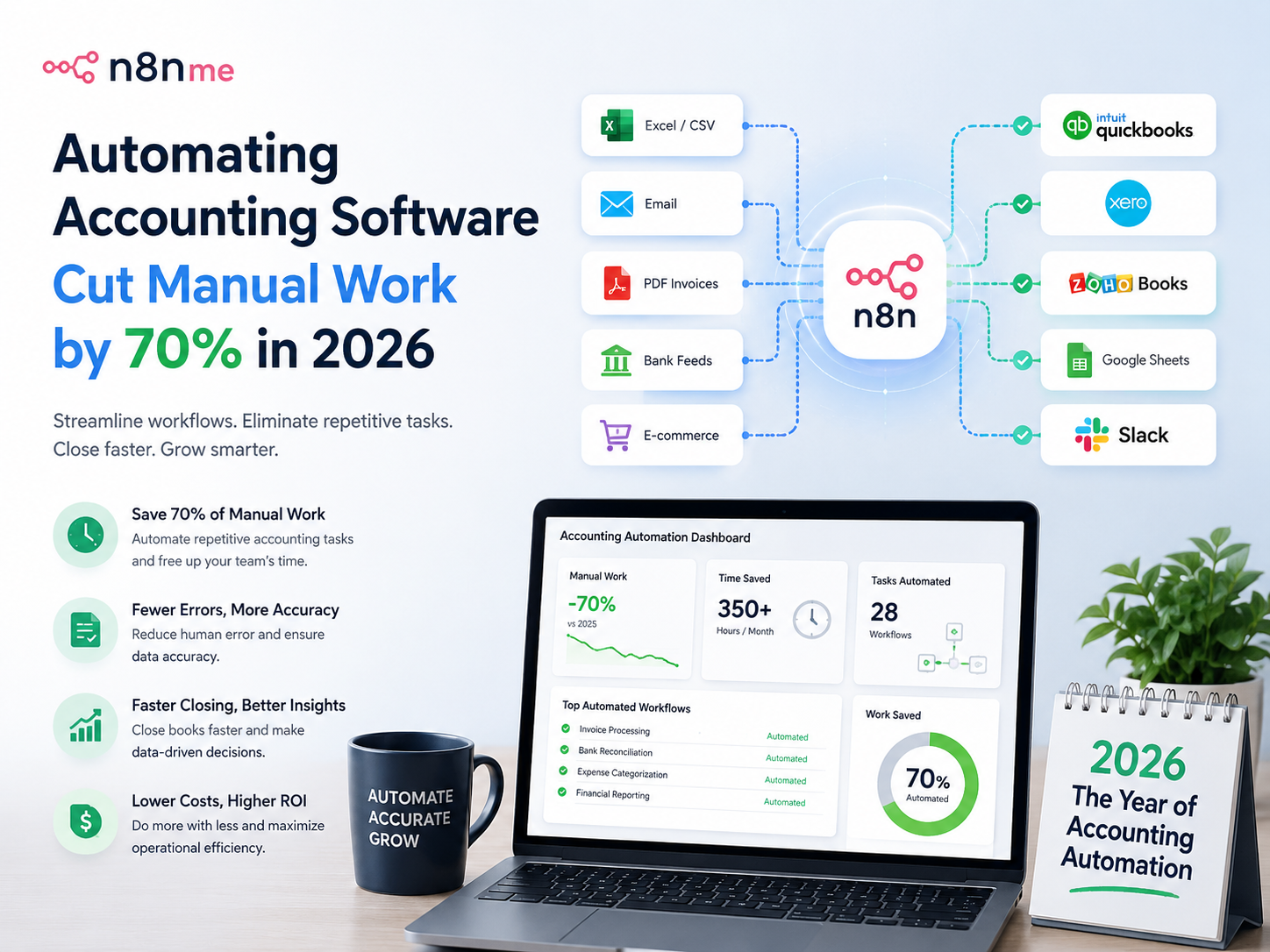
For small business accounting workflows, automation simply means connecting your existing tools, your invoicing software, your bank, your expense tracker, your accounting platform, so that data flows between them automatically when certain conditions are met. When a vendor invoice arrives in your inbox, it gets read, categorized, and logged without you touching it. When a customer pays, your books update in real time. When your payroll runs, the journal entries post automatically.
The ROI is substantial and well-documented. Organizations that implement finance automation typically see 30-40% time savings on automated processes, with some reporting being up to 85 times faster on specific workflows. The average payback period is just 6-12 months. For a small business spending 20-30 hours weekly on manual accounting tasks, that's 10-15 hours reclaimed for work that actually grows the business.
In this guide, we'll walk through four high-impact automation opportunities that can transform how your finance function operates, from invoice processing to month-end close, with specific ROI data and practical implementation guidance.
How to Automate Invoice Processing and Eliminate Manual Data Entry
If there's one accounting process that consumes more time than it should, it's invoice processing. 63% of accounts payable teams spend more than 10 hours per week just processing invoices, and that's before you factor in the time spent fixing errors, chasing approvals, and handling vendor disputes.
The Hidden Cost of Manual Invoice Processing
The average cost to manually process a single invoice is $9.40. That might not sound alarming until you multiply it by your monthly invoice volume. A business processing just 200 invoices monthly spends nearly $23,000 annually on invoice processing alone, and that's just the direct labor cost.
The secondary costs are where the real damage happens. Manual data entry introduces errors in 1-3% of transactions, a seemingly small percentage that translates to significant downstream consequences. A transposed digit in a vendor code, a misread invoice amount, or an incorrect account coding creates payment disputes, damages supplier relationships, and introduces errors that may not surface until audit cycles months later.
One company discovered they had paid the same $4,800 invoice three times because three different employees submitted it through separate channels, and no system caught the duplication. Stories like this are more common than you'd think.
Before: The Manual Invoice Workflow
Consider Sarah, a bookkeeper at a growing 25-person professional services firm. Every Monday, she downloads 40-50 invoices from email attachments, manually keys each one into QuickBooks, matches them to purchase orders (when they exist), prints them for approval signatures, and files the paperwork. The average invoice takes 12 minutes to process. By Friday, she's spent 10 hours on data entry alone, and still has a stack of invoices waiting.
When the controller asks for a cash flow forecast, Sarah can't provide real-time visibility because she's three days behind on invoice entry. When a vendor calls about a missing payment, she spends 20 minutes hunting through email and file folders to track down the invoice status.
After: Automated Invoice Processing
With automation in place, the same workflow looks radically different. Invoices arrive in a centralized inbox where OCR technology automatically extracts vendor name, invoice number, date, line items, and amounts. The system matches each invoice to the corresponding purchase order and receipt records automatically. Invoices that match all criteria route straight to payment without human touch. Only exceptions, mismatches, missing POs, unusual amounts, surface for Sarah's review.
The results are dramatic. Best-in-class organizations reduce invoice processing costs from $9.40 to $2.78 per invoice, a 70% reduction. Processing time compresses from the average 9.2 days to just 3.1 days. And straight-through processing eliminates manual approvals for approximately 49% of invoices at leading organizations.
The Second City, the renowned comedy theater and training center, implemented AP automation and reduced their approval time from 25 days to 48 hours. Their team was freed for more strategic work while ensuring consistent on-time payments that improved supplier relationships.
Automate Accounts Receivable to Accelerate Cash Flow
While accounts payable represents money going out, accounts receivable is money coming in, and for most SMBs, it's not coming in fast enough. 89% of small and medium-sized businesses consider improving their Days Sales Outstanding (DSO) a critical priority, yet the average company takes 45-50 days to collect payment from customers.
Every day a payment is delayed is a day your cash is working for someone else instead of funding your growth.
The Friction of Manual Collections
Manual accounts receivable processes create a cascade of problems. Invoicing depends on someone remembering to generate and send bills. Payment tracking requires checking bank accounts and manually updating spreadsheets. Collection efforts are reactive, triggered only after invoices become overdue rather than preventing delinquency through timely reminders.
More than 75% of SMBs still handle payment disputes manually through phone calls and emails, creating friction for customers accustomed to digital-first experiences while consuming excessive finance team time on administrative work.
The Cash Flow Impact of Slow Collections
Consider the math for a company with $2 million in annual receivables. At a 50-day average collection period, approximately $274,000 of their money is sitting in customer accounts at any given time. If automation reduces DSO by just 17%, the average reported by companies implementing electronic invoicing, that frees up approximately $47,000 in working capital.
That's not new money, but it's your money available when you need it, to make payroll, invest in inventory, or fund growth initiatives.
The Automated AR Workflow
Modern accounts receivable automation creates a seamless flow from invoice to payment to reconciliation. Digital invoicing with embedded payment links eliminates the friction of traditional email-based billing. Automated payment reminders ensure invoices remain top-of-mind without requiring manual follow-up. Customer self-service portals provide access to invoice history, payment status, and receipt retrieval, reducing support inquiries while empowering customers.
When payments arrive, automated reconciliation matches incoming funds to invoices without manual intervention. Predictive analytics identify at-risk accounts before invoices become delinquent, enabling proactive outreach rather than reactive collection calls.
The result: companies implementing AR automation report an average 17% reduction in DSO, meaning they collect payments substantially faster simply by reducing friction in the payment process.
Speed Up Your Month-End Close with Automated Reconciliation
The financial close process remains one of the most labor-intensive, error-prone, and strategically limiting activities in accounting operations. Historically, the close has been a defined period during which finance teams withdraw from regular duties to execute a complex sequence of manual reconciliations, journal entries, adjustments, and verifications culminating in financial statements weeks after the close of the accounting period.
By the time your financial reports are ready, the data is already stale, and you're making decisions based on information that's weeks old.
The Resource Drain of Manual Close Processes
Accountants and finance professionals spend 65% of their time on manual, low-value processes, with reconciliations representing a particularly time-consuming component. In many organizations, close management is conducted through multiple spreadsheets and checklists that exist more in team members' heads than in any centralized system.
This fragmented approach creates risk of forgotten reconciliations, duplicate work, or skipped verification steps, directly impacting the accuracy of financial reporting and subsequently the quality of decisions leadership makes from those reports.
Bank Reconciliation: The Close Bottleneck
Bank reconciliation specifically represents a particularly time-consuming activity requiring more time during month-end close than any other single process. Without reconciled bank balances, every downstream accounting output, reports, dashboards, forecasts, remains suspect.
Yet the traditional manual reconciliation process, typically conducted as a point-in-time comparison at the end of a period, leaves organizations vulnerable to fraud, errors, and delayed discovery of discrepancies. By the time reconciliation is complete, the relevant transactions may be weeks or months old, limiting ability to investigate root causes or prevent recurrence.
The Shift to Continuous Close
Modern close automation platforms change this dynamic fundamentally by enabling continuous reconciliation rather than periodic catch-up. By connecting directly to bank feeds and accounting systems, these platforms use rules-based transaction matching and AI-powered exception management to produce accurate, up-to-date balances.
The time savings are substantial. Best-in-class teams complete reconciliations in 3.1 days compared with 17.4 days for average organizations. More significantly, continuous reconciliation enables controllers to implement daily reconciliation rather than waiting for the month-end rush, providing real-time cash visibility that enables faster decision-making.
Organizations implementing financial close automation software report close timelines reduced from weeks to 3-5 days, with some achieving same-day close capability. Error rates drop by approximately 90%, and the overtime pressure that burns out accounting teams every month-end becomes a thing of the past.
Streamline Expense Reports and Employee Reimbursement
Employee expense management represents another significant pain point for accounting teams, consuming excessive time while introducing substantial fraud risk. The average expense report costs approximately $58 to process and requires roughly 20 minutes of staff time, yet 19% of expense reports contain errors that necessitate rework costing an additional $52 and 18 minutes per occurrence.
For a business processing 1,000 expense reports annually, that's over 400 hours and thousands of dollars in staff time, much of it spent on error correction rather than value-added work.
The Hidden Costs of Manual Expense Processing
The delays inherent in manual expense processing create employee satisfaction issues alongside operational inefficiency. In a recent analysis of expense claims data spanning 18 months, only 2.6% of expense reports were approved immediately upon submission. Nearly 27% took 30 or more days for approval, creating frustration for employees awaiting reimbursement and uncertainty in cash flow projections.
These delays damage employee morale and retention, particularly for remote or mobile workers who expect rapid reimbursement through modern digital systems.
Expense fraud accounts for 14% of all occupational fraud, with a median loss of $33,000 per case. Manual processes lack the capability to systematically identify suspicious patterns like duplicate submissions, inflated mileage claims, or policy violations before payment.
The Automated Expense Workflow
Modern expense management automation captures expenses through multiple channels, corporate cards, receipt OCR, API feeds from merchants, eliminating manual entry entirely. Smart workflows auto-fill forms based on captured data, flag policy violations before submission, and enable mobile approvals so managers can review expenses while away from their desks.
Organizations automating expense management see up to a 28% drop in processing costs and a 29% decrease in human error. Automated reimbursement ensures employees receive payments rapidly, often within 48 hours, dramatically improving satisfaction.
Compliance benefits extend beyond efficiency. Automated systems apply jurisdiction-specific tax rules in real-time, flag anomalies for review, and maintain complete audit trails. Organizations report reducing audit findings related to expense management by as much as 65% while simultaneously improving visibility into spend behavior.
Your 90-Day Finance Automation Roadmap
You don't need to automate everything at once. In fact, trying to do too much simultaneously is a common reason automation initiatives stall. Instead, approach this as a 90-day journey, starting with the highest-impact, fastest-payback opportunity and building from there.
Month 1: Automate Invoice Processing
Start with accounts payable automation. It's the most mature automation domain with the clearest ROI, and the pain is usually acute enough that you'll see immediate relief. Focus on:
- Setting up automatic invoice capture from your email
- Configuring OCR to extract vendor, amount, and date data
- Creating approval routing rules based on invoice amount
- Integrating with your accounting software for automatic posting
Target: Reduce invoice processing time by 50% and eliminate data entry errors.
Month 2: Add AR or Expense Automation
With AP running smoothly, choose your next priority based on your biggest pain point:
- If cash flow is tight: Implement AR automation to accelerate collections
- If employee complaints are high: Deploy expense management automation
Both deliver substantial ROI, so let your current pain point guide the decision.
Month 3: Tackle Financial Close Automation
With transactional processes automated, turn your attention to the close process. Implement continuous reconciliation and automated task management to compress your close timeline from weeks to days.
By the end of 90 days, you'll have transformed your finance function from a manual, reactive operation into a streamlined, proactive capability that provides real-time visibility and strategic insight.
Why n8n Makes Sense for Finance Automation
As you evaluate automation platforms, consider what matters most for financial workflows:
Data security and control. Financial data is sensitive. n8n's self-hosted option keeps your data in your infrastructure, not on third-party servers. For businesses handling customer payment data or subject to compliance requirements, this matters.
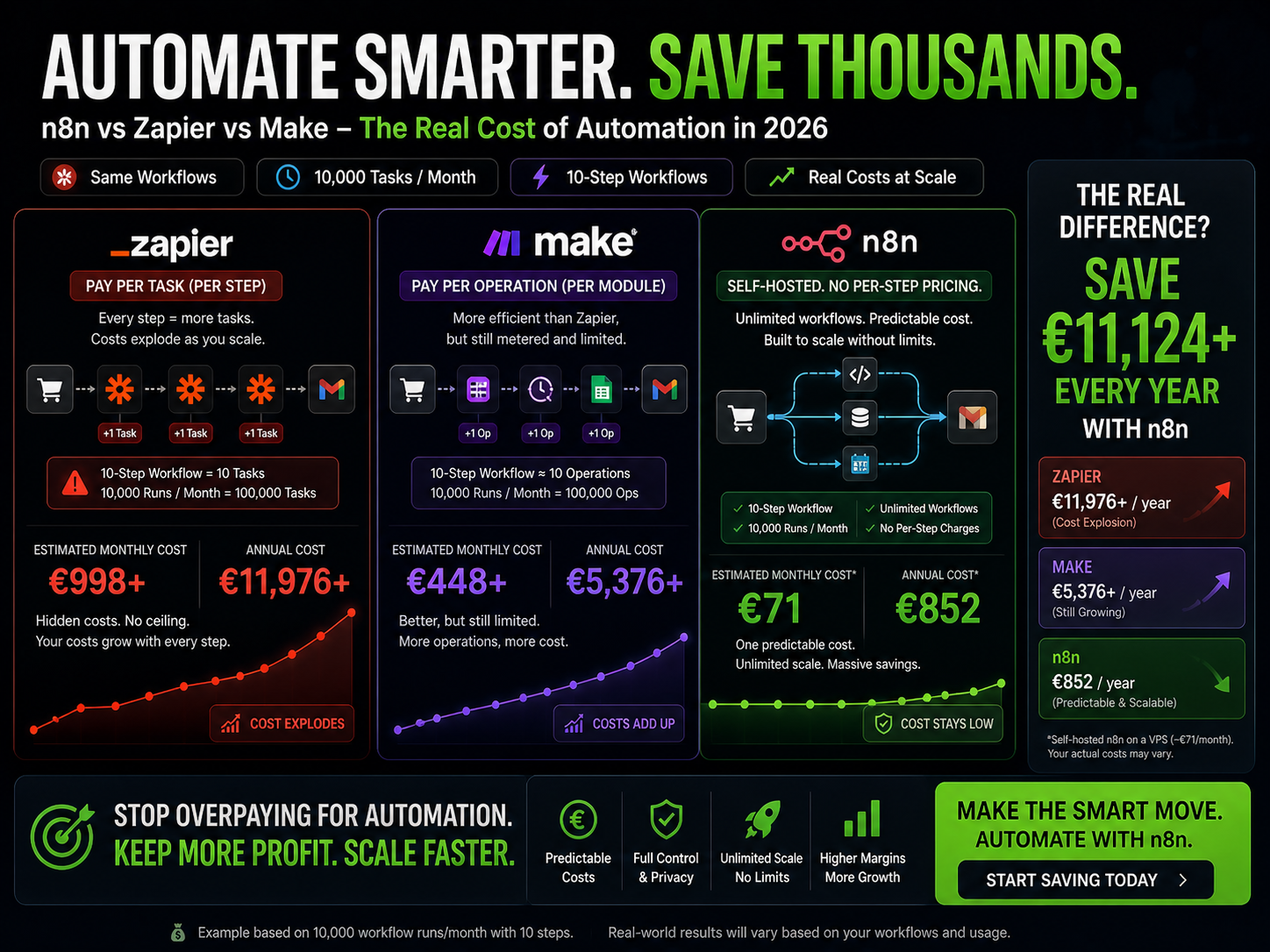
Predictable costs at scale. Unlike platforms that charge per task or per execution, n8n offers unlimited executions. As your transaction volume grows, your automation costs don't scale with it. For a growing business, this can mean thousands in annual savings.
Extensive integrations. With 400+ integrations including QuickBooks, Xero, Stripe, PayPal, and major banks, n8n connects the tools you already use without forcing platform changes.
No vendor lock-in. As open-source software, n8n gives you freedom. You're not dependent on a vendor's roadmap, pricing changes, or continued existence. Your automations belong to you.
Visual workflow builder. Build complex finance automations, multi-step approval flows, conditional logic, data transformations, through a visual interface that doesn't require coding expertise.
Start Reclaiming Your Time
The finance teams that thrive in the coming years won't be the ones working the longest hours. They'll be the ones who automated the repetitive work and redirected their energy toward analysis, strategy, and decisions that actually move the business forward.
You don't need a six-month implementation project or an IT department to get started. You need one clear first workflow and the right tool behind it.
Start building your first finance automation today at n8nme.com/register. Your future self, the one who isn't manually matching invoices at 6pm on a Friday, will thank you.
If you need help with anything, get in touch with jeroen[at]clsystems[dot]nl as he has deep knowledge of n8n workflows.